From the library
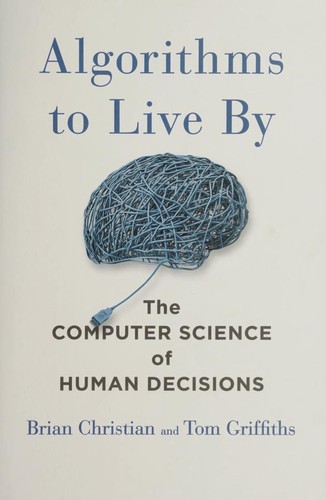
Algorithms to Live By
Brian Christian, Tom Griffiths, 2016
In one paragraph
Christian and Griffiths map solved problems in computer science onto ordinary human ones: optimal stopping for when to stop looking, explore versus exploit for when to try something new, caching for what to keep close at hand, scheduling for what to do next. The contribution is giving everyday decisions a name and a known-good rule instead of a fresh agonising each time. Most useful for decisions that recur often enough to deserve a policy. Least useful for one-off choices, where the modelling costs more than the decision is worth.
Where this sits in the operating system
Mental Models & Decision Frameworks
Systems Over Goals
Compound Leverage
Systems Over Goals
Key insights
Optimal stopping says look at 37% of the options to calibrate, then take the first that beats everything seen. Searching longer is a cost, not diligence.
Explore/exploit reframes novelty: how much you should try new things depends on how much time remains to enjoy what you find.
Some problems are computationally hard for anyone. Knowing that is permission to use a good-enough rule rather than agonise.
Recognise it early
The failure and the correction sit side by side deliberately. Read the left column asking whether any of it is already true of you.
Over‑engineering simple choices
Ignoring constraints
Perpetual exploring
Excess context switching
No templates/caches
The same idea, argued differently
Peter Drucker
Patrick Lencioni
Gene Kim, Kevin Behr, George Spafford
Ryan Deiss
The full breakdown
Before you close this
Naming the specific moment you will act roughly doubles the odds you do.
Reference
- Author
- Brian Christian, Tom Griffiths
- Published
- 2016
- Category
- Philosophy
We value your privacy
We use cookies to enhance your experience, analyze site traffic, and personalize content. You can manage your preferences or learn more in our Privacy Policy.