From the library
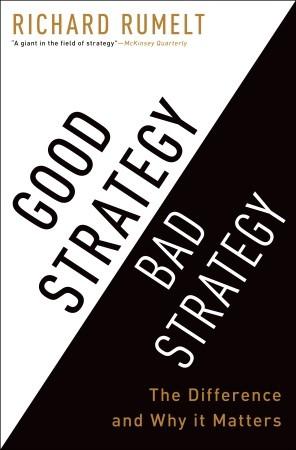
Good Strategy/Bad Strategy
Richard Rumelt, 2011
In one paragraph
The author examines the concepts of good strategy (a succinct description of a situation or problem at hand, followed by directions for action in order to solve the problem or use the situation by using strengths, not exposing weaknesses and concentrating resources in order to successfully emerge at the other end), bad strategy (not "no strategy" or "strategy that does not work", but rather the general listing of desirable outcomes and objectives without focus, concentration or indication on how to achieve those or even analysis of the situation at hand, but padded with fluffy language and lofty "concepts").
The book provides an in-depth description of both concepts and a number of examples and case studies for both.
Where this sits in the operating system
Focus & Essentialism
Focus & Essentialism
Systems Over Goals
Continuous Improvement & Feedback Loops
Key insights
A strategy is diagnosis, guiding policy, coherent action. A list of goals with numbers attached is none of those.
Bad strategy is not the absence of good strategy but a positive presence: fluff, failure to face the problem, and objectives mistaken for plans.
Strategy is fundamentally about what you decline. A plan compatible with every outcome is not one.
The same idea, argued differently
Geoffrey Moore
Frank Slootman
George Stalk Jr., Thomas Hout
Sun Tzu
The full breakdown
Before you close this
Naming the specific moment you will act roughly doubles the odds you do.
Reference
- Author
- Richard Rumelt
- Published
- 2011
- Category
- Business
We value your privacy
We use cookies to enhance your experience, analyze site traffic, and personalize content. You can manage your preferences or learn more in our Privacy Policy.