From the library
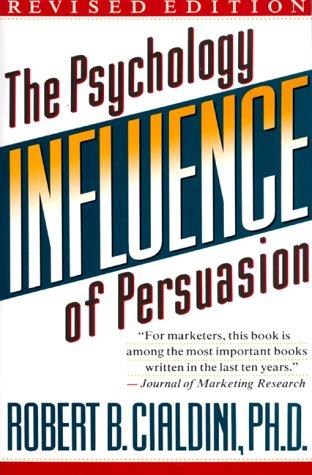
Influence: The Psychology of Persuasion
Robert Cialdini, 1984
In one paragraph
Explores the psychology of why people say yes and how to apply these insights ethically in business and everyday life through six key principles of influence.
Also tagged
Where this sits in the operating system
Continuous Improvement & Feedback Loops
People & Relationships
Key insights
Six levers: reciprocity, commitment and consistency, social proof, authority, liking, scarcity. They operate as shortcuts, which is why awareness does not disable them.
Commitment escalates. Small agreements make larger ones easier, which is the mechanism behind most sales sequences and most radicalisation.
Cialdini spent years inside sales training rather than reasoning from the lab, which is why the examples land.
Recognise it early
The failure and the correction sit side by side deliberately. Read the left column asking whether any of it is already true of you.
Using influence to manipulate rather than create value
Providing fake reciprocity or insincere compliments
Creating artificial scarcity or false urgency
False authority claims or name-dropping
Seeking compliance instead of genuine commitment
The same idea, argued differently
Eric Schmidt, Jonathan Rosenberg, Alan Eagle
Reed Hastings, Erin Meyer
The full breakdown
Before you close this
Naming the specific moment you will act roughly doubles the odds you do.
Reference
- Author
- Robert Cialdini
- Published
- 1984
- Category
- Self-Help
We value your privacy
We use cookies to enhance your experience, analyze site traffic, and personalize content. You can manage your preferences or learn more in our Privacy Policy.