From the library
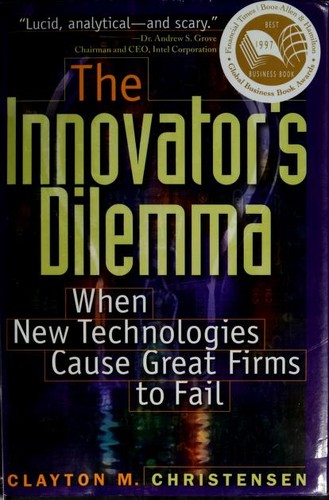
The Innovator's Dilemma
Clayton Christensen, 1997
In one paragraph
Christensen explains how established companies can fail by doing everything right, and introduces the theory of disruptive innovation.
Also tagged
Where this sits in the operating system
Mental Models & Decision Frameworks
Continuous Improvement & Feedback Loops
Mental Models & Decision Frameworks
Key insights
Good management causes the failure. Listening to your best customers and investing in the highest-margin work is exactly what leaves the low end open.
Disruptive technologies start worse on the metrics incumbents care about and improve faster than the market's needs.
The response is a separate organisation with its own cost structure, because the parent's resource allocation will starve it otherwise.
Recognise it early
The failure and the correction sit side by side deliberately. Read the left column asking whether any of it is already true of you.
Applying sustaining innovation approaches to disruptive opportunities
Expecting disruptive innovations to immediately serve current customers
Using existing business model metrics for disruptive innovations
Dismissing simple solutions because they seem inferior
Trying to solve large company growth needs with small markets
The same idea, argued differently
Nassim Nicholas Taleb
Jeff Booth
W. Chan Kim, Renée Mauborgne
The full breakdown
Before you close this
Naming the specific moment you will act roughly doubles the odds you do.
Reference
- Author
- Clayton Christensen
- Published
- 1997
- Category
- Business
We value your privacy
We use cookies to enhance your experience, analyze site traffic, and personalize content. You can manage your preferences or learn more in our Privacy Policy.